
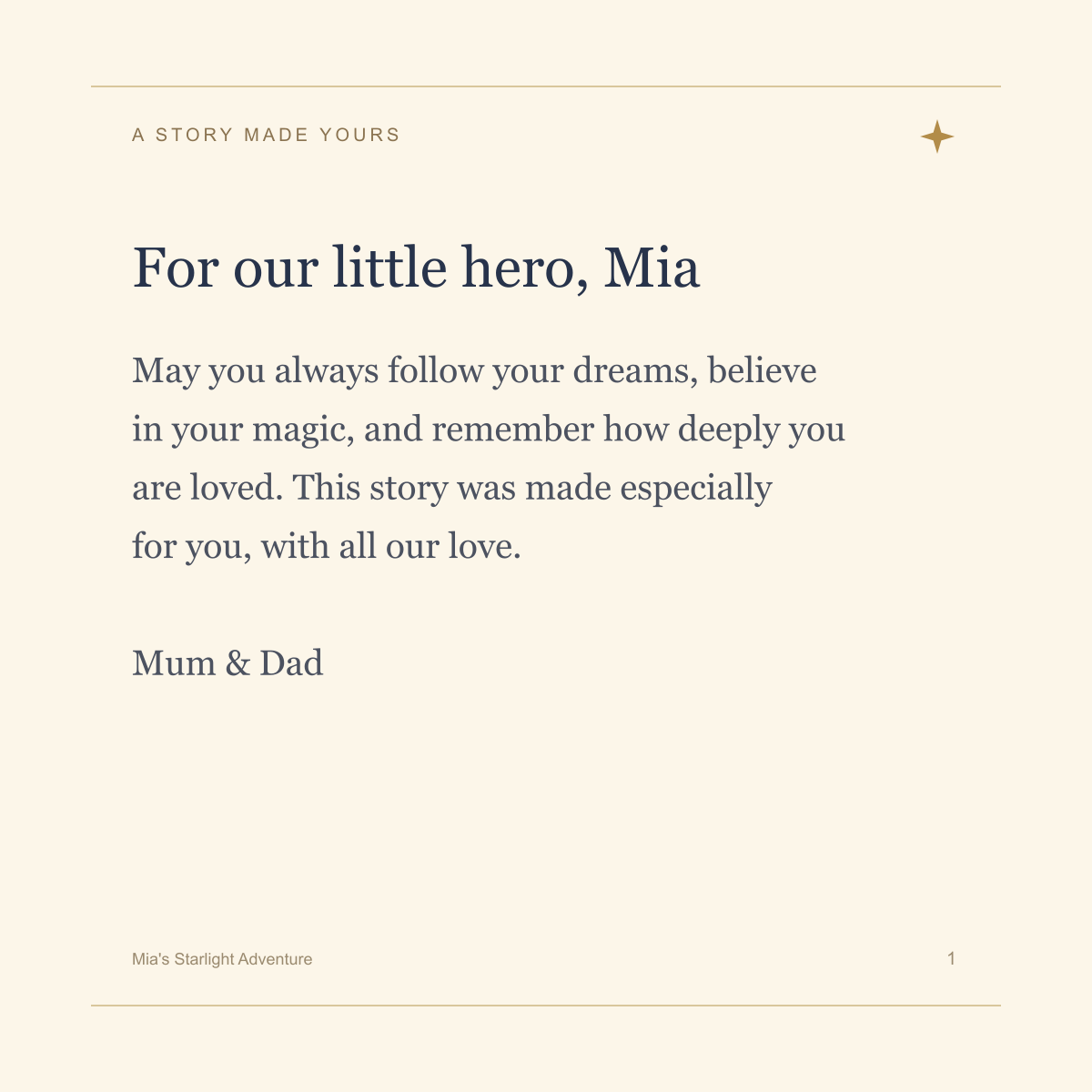
The illustrations make the child part of the adventure. The dedication gives you a place in the book too. It is a small space for words they can return to: a wish, a shared memory or a reminder of the person who chose the gift.
Start with one thing you want them to remember
A dedication can become difficult when you try to say everything at once. Begin with one thought: how much you love them, a quality you admire or an adventure you hope to share.
Write it as if you were speaking to them. “For the little explorer who always asks one more question. May you keep discovering wonderful things. Love, Mum and Dad.” A message like this works because it sounds like someone, rather than a greeting-card template.
Sample layout
The adventure begins

Example spread: text on the left, illustration on the right. Fictional demonstration copy.
From grandparents: leave a little of your own voice
A familiar nickname, the way you say goodnight or a place you like visiting together can make the message unmistakably yours. You do not need a grand statement about the future.
For example: “For our favourite walking companion. There will always be another story and another adventure waiting when you visit. With love, Grandma and Grandad.” Replace the details with something you genuinely share.
For a birthday or Christmas, connect it to the moment
A date or age can turn the dedication into a small marker of the occasion. Keep the rest of the wording open enough for the child to enjoy beyond that one day.
For a birthday: “For your fifth birthday, and all the stories still to come. Keep being curious, kind and wonderfully you.” For Christmas: “A little adventure for this Christmas, and a book for all the cosy evenings ahead.”
Explore the birthday gift guideBorrow the structure, then make the words yours
The examples in this guide are original starting points. Change the names, the sign-off and the detail at the centre of the message. One true detail is often more meaningful than several decorative sentences.
If you prefer something very short, try a direct wish followed by who it is from. You can also write in the language you share as a family; check that your wording and characters appear correctly in the proof.
Read it aloud before you approve the book
Check the child’s name, spelling, punctuation and who the message is from. If you include a date, confirm the year as well. Reading aloud is a simple way to spot a phrase that does not sound like you.
Look at the dedication in the final book proof, rather than only in the form you filled in. That is where you can check the layout and line breaks before printing. A small pause here helps make the finished gift feel carefully chosen.
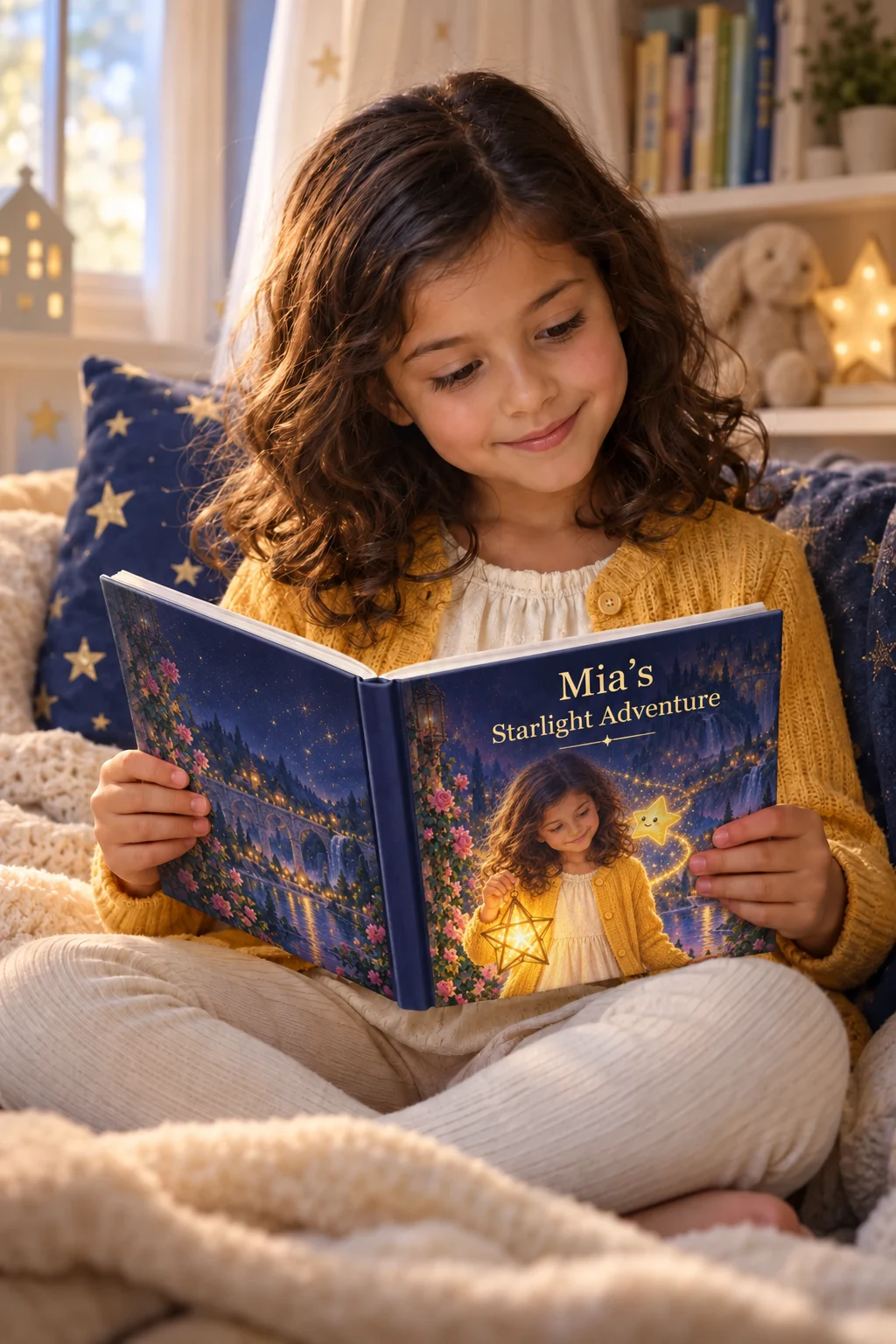
The finished storybook
A book with Mia at its heart.
The familiar face. The illustrated cover. A story made for its little hero.
Fictional reading scene, shown as a product example.
A few helpful answers
Does the dedication need to be long?
No. A short, specific message can feel very personal. Check the current form for any character limit.
Can I use these examples?
Yes. They are original suggestions written for this guide. Adapt them to your relationship and occasion.
See what makes their book personal
Follow the same fictional child from the starting photo to the illustrated character, their adventure and the finished book. Choose a style, then start your own.

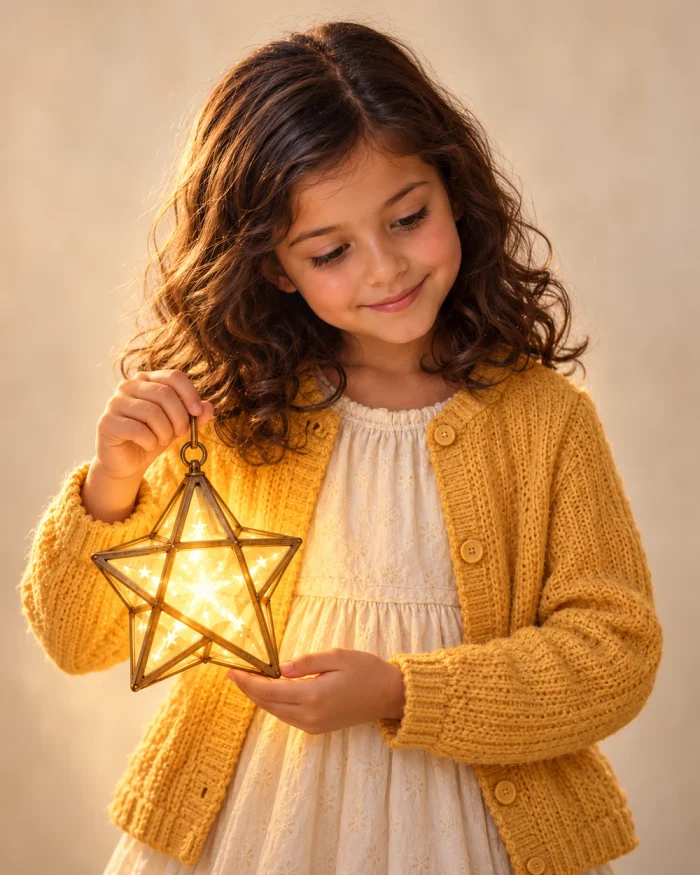
Fictional demonstration: Mia. Your own book is created from your chosen photos and approved character.